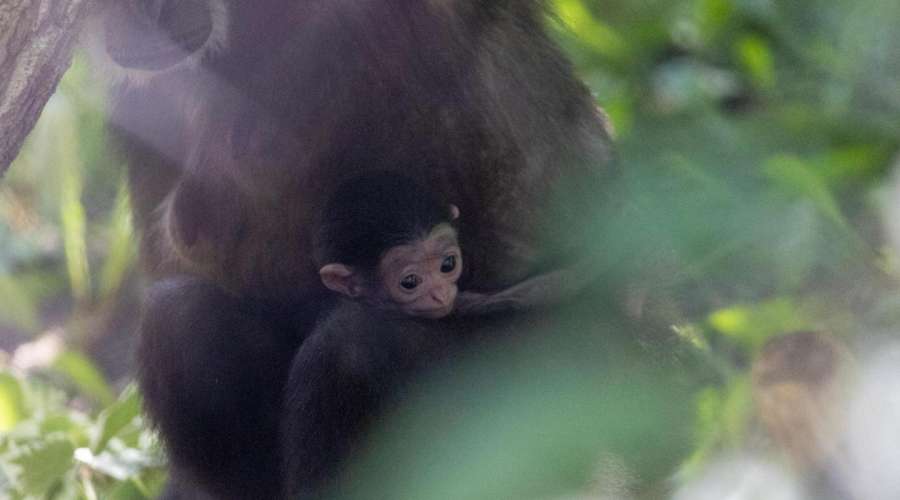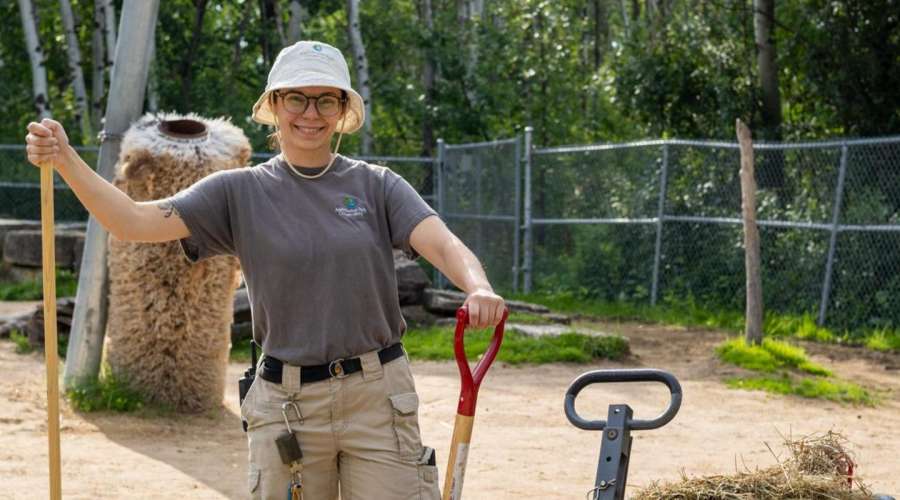

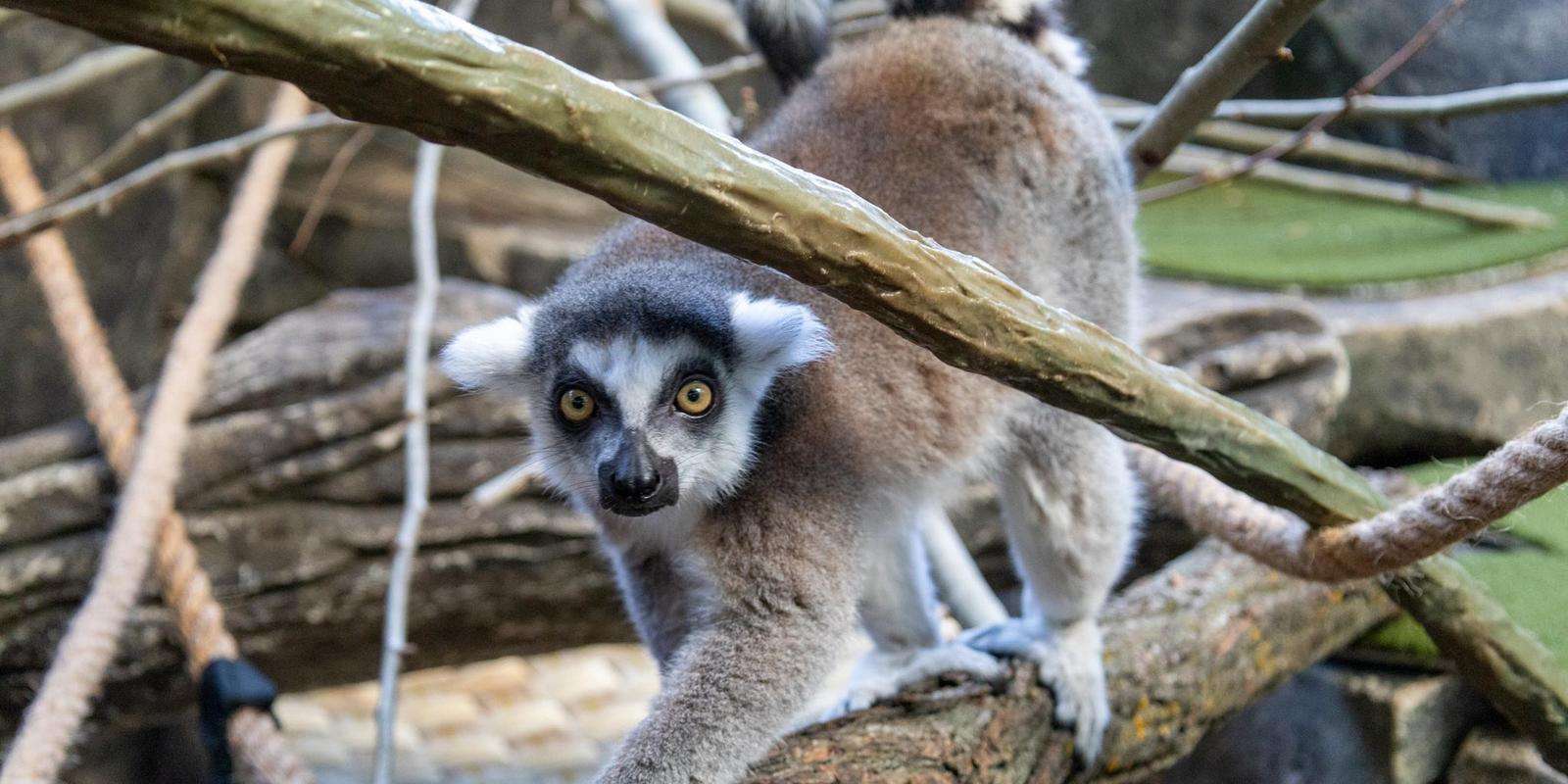
For the past eight years, animals at the Zoo, including white-handed gibbons and ring-tailed lemurs, have been moving around on durable artificial vines, thanks to the incredible work of our volunteers.
Our volunteer team was first tasked with creating artificial vines in 2017 to help white-handed gibbons navigate their habitats. This need arose because rope is difficult to clean and becomes too rough when it dries, while alternatives such as pre-made urethane vines can be very expensive. The team identified a unique solution that, while time-intensive to produce, is both cost-effective and worthwhile.
“We make the artificial vines using recycled garden hoses as a base. They are strung with aircraft cable and the ends are fitted with hardware.” says Beverlee (Bev) Hicks, an 11-year Park volunteer and artificial vine project lead. “The putty-like material we apply over the hose, which gives the hose its natural vine look - nicknamed ‘goop’ - is created by mixing three products plus colorant in exact amounts.”
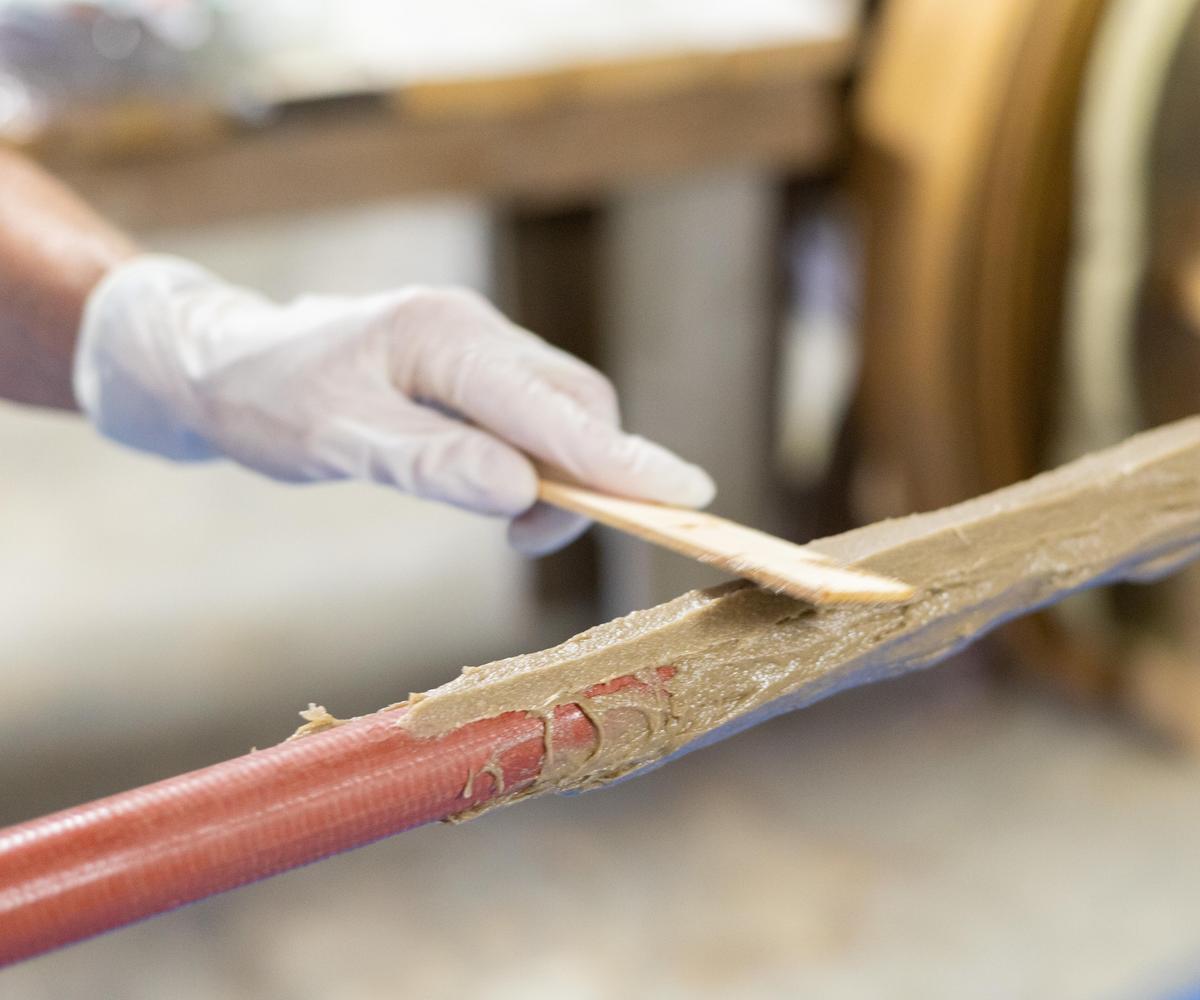
This soft material, applied to the recycled garden hose (nicknamed 'goop'), has to be applied in eight minutes to properly cure onto the hose and itself.
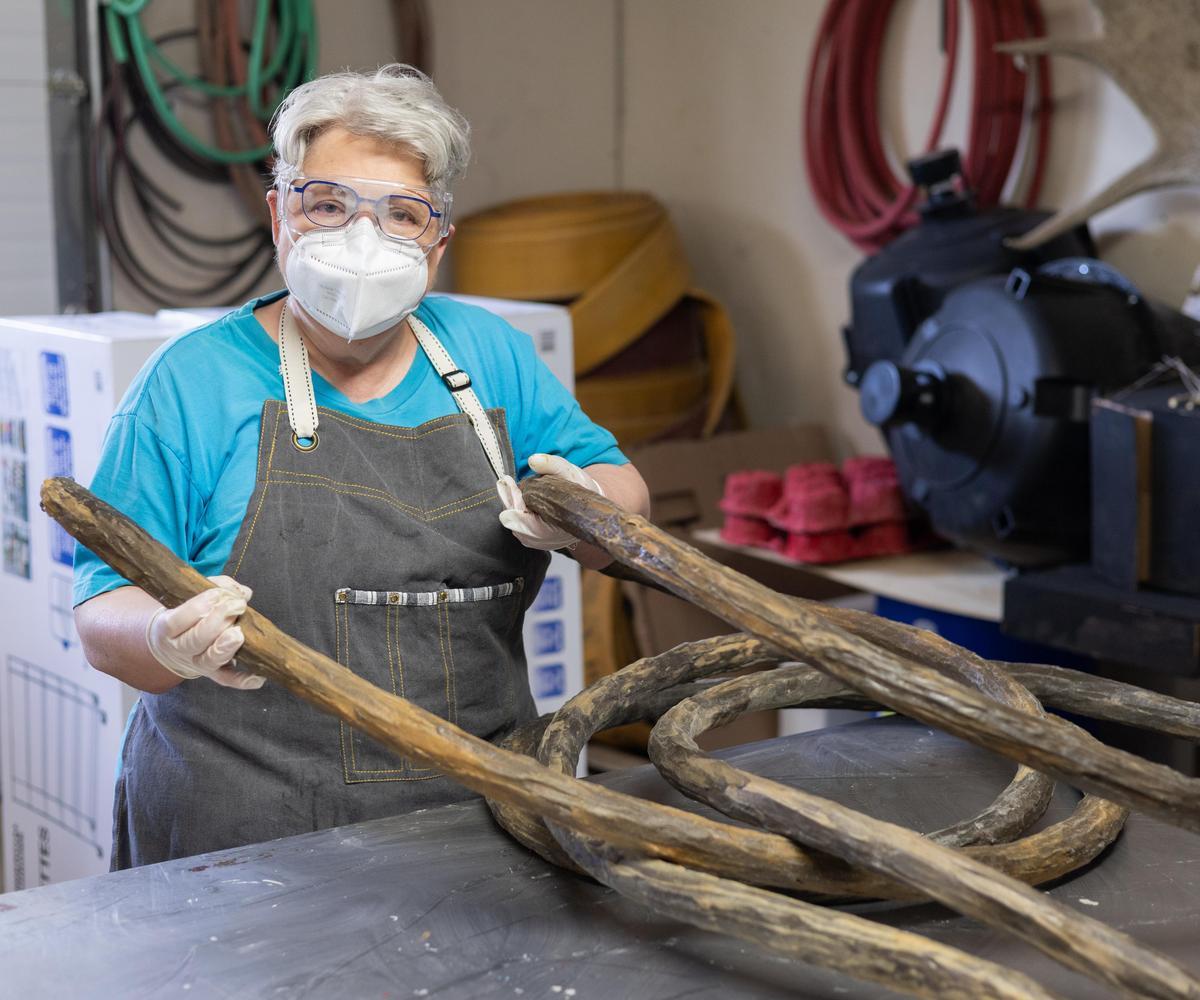
Beverlee (Bev) Hicks, 11-year volunteer with the Park, with recently made artificial vines.
Hicks highlights the complexity of this project, stemming from the nature of the product components and careful application required.
“Working in full PPE, the team applies multiple layers of ‘goop' to the hose. Due to the goop’s fast cure rate, only small amounts can mixed at one time. Each mix must then be applied within 8 minutes to ensure it will bond with the hose and with itself.” Once all the layers have been applied the hose it is left hanging for 24 hours to ensure a full cure. Vines are typically not introduced to a habitat for 7 days to allow any odour to dissipate.
The eight volunteers on this project are trained in this detailed process and must be able to volunteer for consecutive days as the product ingredients have a very short shelf life once opened. In spite of the time-sensitivity, required focus, attention to detail and general messiness, the team members find the work very rewarding and are always keen to make more vines.
.jpg)
Beverlee (Bev) Hicks and Janice Martin, putting on 'goop' to make artificial vines for our habitats.
From their limited time and resources, they create an incredible bounty of vines for the animals. This year the team worked 10 half days to make 115 feet of new vines and repair one existing vine. This brings the total footage of vines made since 2017 to over 1550 feet.
The project is in such high demand that the team has already been approached to produce more vines for next year.
Thank you to our incredible vine-making volunteer team, who make such an important contribution to the well-being of the animals that use these vines every day: Bev Hicks, Jayne Sims, Kathryn Terry, Debra Trump, Jennifer Ste Croix, Sandra Spragg, Janice Martin, and John Toothill.
On your next visit to the Zoo, make sure to visit the white-handed gibbon, ring-tailed lemur, and Linnaeus's two-toed sloth habitats to see the excellent work of our volunteers!
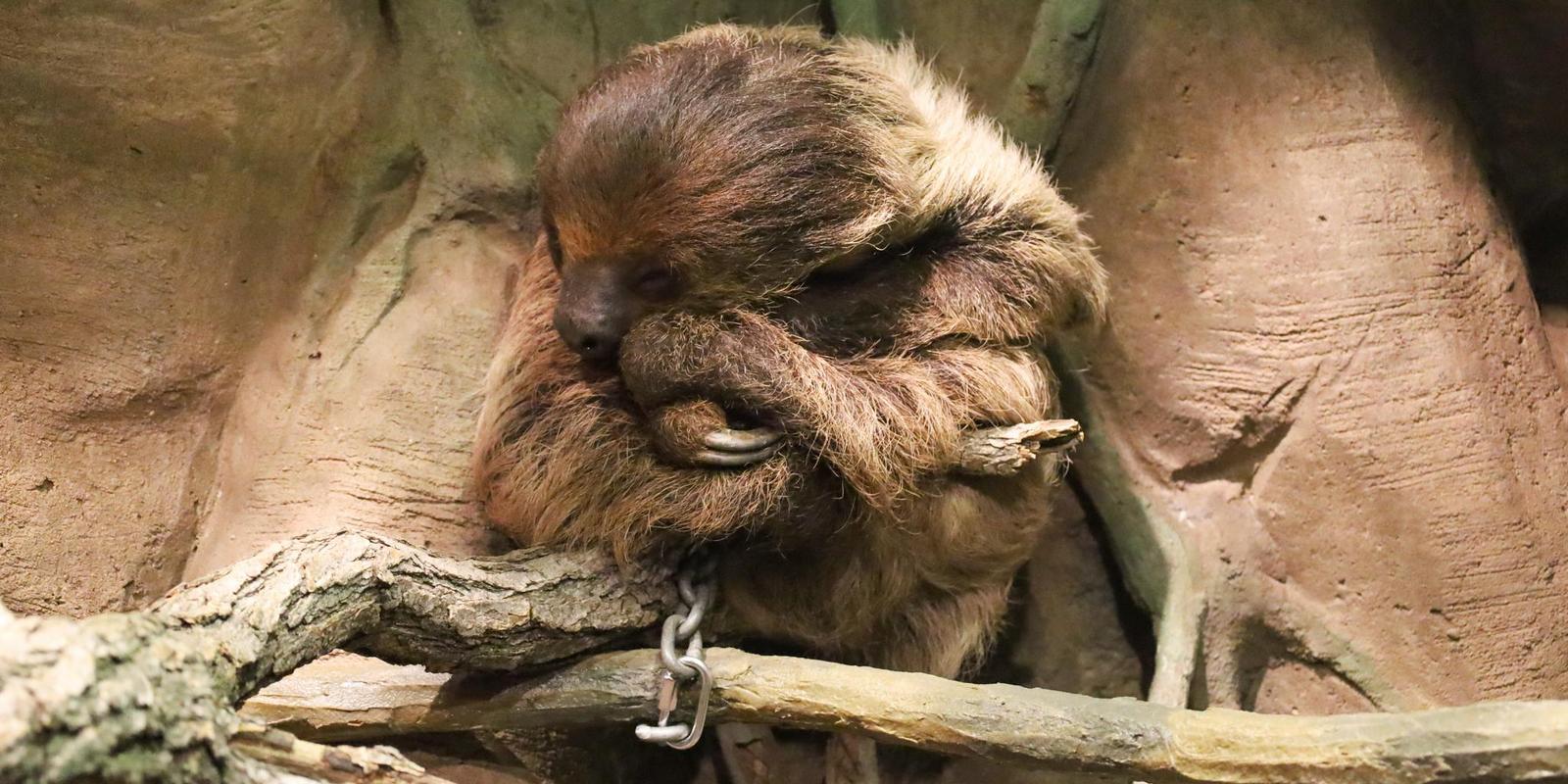
Roger, the Linneaus's two-toed sloth, sleeping above the artificial vine in his habitat.