
February 7 is Reverse the Red Day, an initiative that acknowledges global biodiversity loss and, in partnership with conservation organizations, works to accelerate action to halt and reverse it.
The "red" in "Reverse the Red" refers to the International Union for Conservation of Nature (IUCN) Red List, the world's most comprehensive source of conservation status information for animal, fungal, and plant species. Since its establishment in 1964, more than 172,600 species have been assessed for conservation status. Unfortunately, more than 48,000 species on this list are currently classified as endangered.
The IUCN Red List provides conservationists and scientists, including our Conservation and Research team, with critical information to identify which species are at risk and how we can help protect them and the natural resources they depend on.
Preventing species extinction is one of our core initiatives, supported by our Conservation and Research team’s Conservation Strategy. Through our year-round research and programs, our team continues to lead efforts to halt and reverse biodiversity loss, with a focus on species here in Manitoba.
Grassland Butterfly Conservation Program
This signature program focuses on reversing biodiversity loss for the endangered Poweshiek skipperling butterfly. Over eight years, we've released more than 700 butterflies into the wild, including 174 Poweshiek skipperlings in 2025 alone.
This past year, we were honoured with the 2025 North American Conservation Award from the Association of Zoos and Aquariums (AZA) and the Colonel G.D. Dailley Award for Ex-Situ Species Propagation for our Poweshiek skipperling conservation efforts.
To learn more about the Poweshiek Skipperling and our conservation program, visit our website.
Saving Animals from Extinction (SAFE)
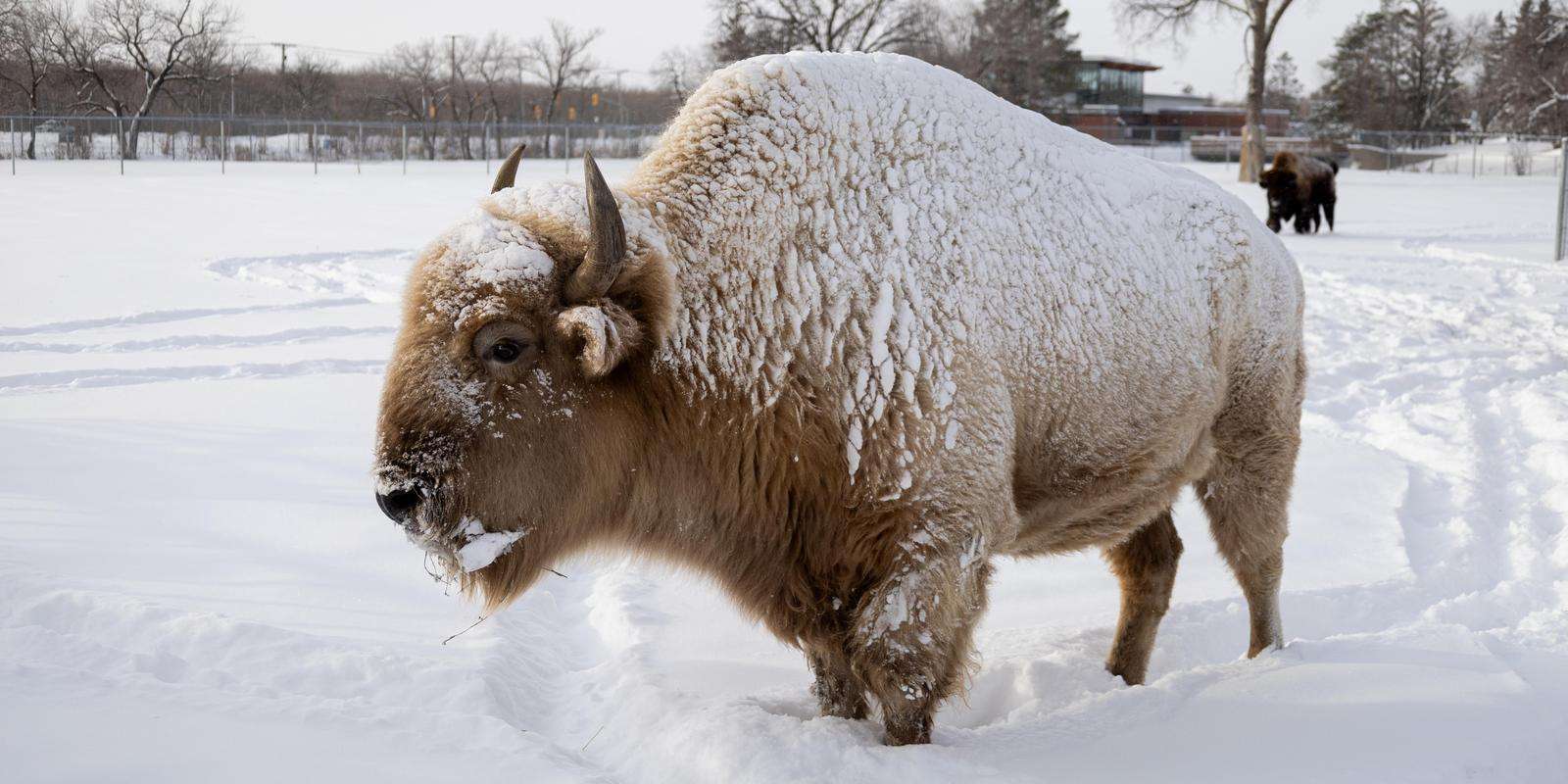
The SAFE program is a collaborative initiative that works to prevent the extinction of various animals, with support from other AZA-accredited zoos and aquariums. Our Conservation and Research team actively participates in the North American Songbird SAFE program, which supports the natural areas our local birds depend on. Our Zoo also participates in other SAFE programs, including Monarch, North American Bison, Red Panda, Snow Leopard, and, most recently, Prairie Butterfly.
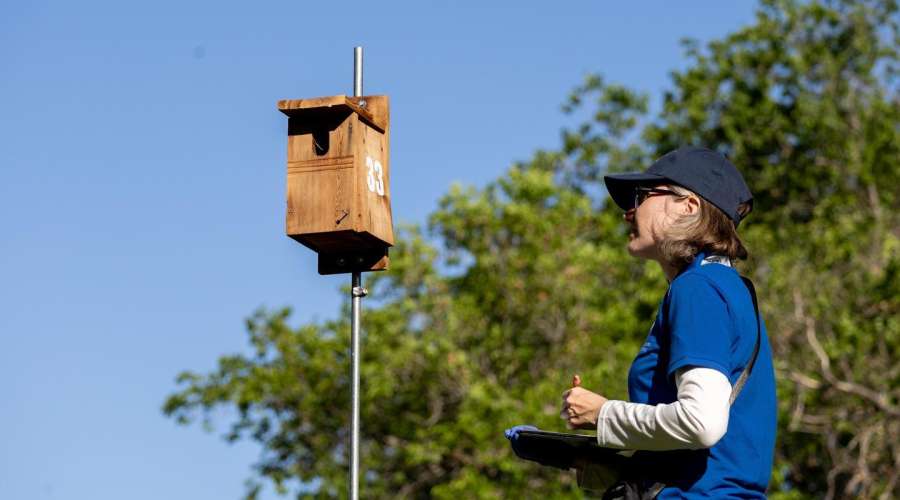
A recent example of our work is the artificial chimney located near the McFeetors Heavy Horse Centre at the Zoo. The threatened chimney swift needs vertical surfaces to roost, so this artificial chimney provides a safe, undisturbed space for them to nest and raise their young. In 2025, the swifts successfully fledged five nestlings!
Educating for the Future
As part of our ongoing effort to support wildlife species recovery, our Conservation and Research staff are trained in Facilitating Species Conservation Planning, a series of workshops run by the Conservation Planning Specialist Group, a unit of the IUCN Species Survival Commission. This seven-week program helps participants learn how to design and facilitate effective conservation planning.
This program provided a roadmap to shape the SAFE Prairie Butterfly program, co-founded by Laura Burns, Conservation Program Manager at Assiniboine Park.
By effectively communicating with organizations, government officials, and social groups about the importance of species conservation, we will help reduce biodiversity loss and secure the support needed to make a significant environmental impact in Manitoba and beyond.
How You Can Help
There are many ways you can help Reverse the Red and support the essential work of our Conservation and Research team:
- Visit Assiniboine Park Zoo during our special weekends! We’re hosting Polar Bear Weekend on February 28 and March 1, and Red Panda Weekend later in September. Both weekends help raise awareness of our animals’ wild counterparts and fund our team's research.
- Educating yourself on biodiversity loss and the IUCN Red List. The more we understand our changing the world, the more invested we become in helping it.
- Living an eco-friendlier lifestyle. Making small changes, such as reusing and reducing products at home and eating more meat-free meals, helps reduce our global footprint.
- Consider donating to the Wildlife Conservation Fund or becoming an Inspire Conservation member. Your contribution helps continue our research and fund programs like our Grassland Butterfly Conservation Program, so we can keep being there for the species that need us most.