
Assiniboine Park Zoo is home to a variety of animals suited to our chilly Manitoban winters, from the mighty polar bear to our American elk and reindeer. Not only do they have incredible physical adaptations that help keep them warm, but we also care for some less obvious cold-weather champions.
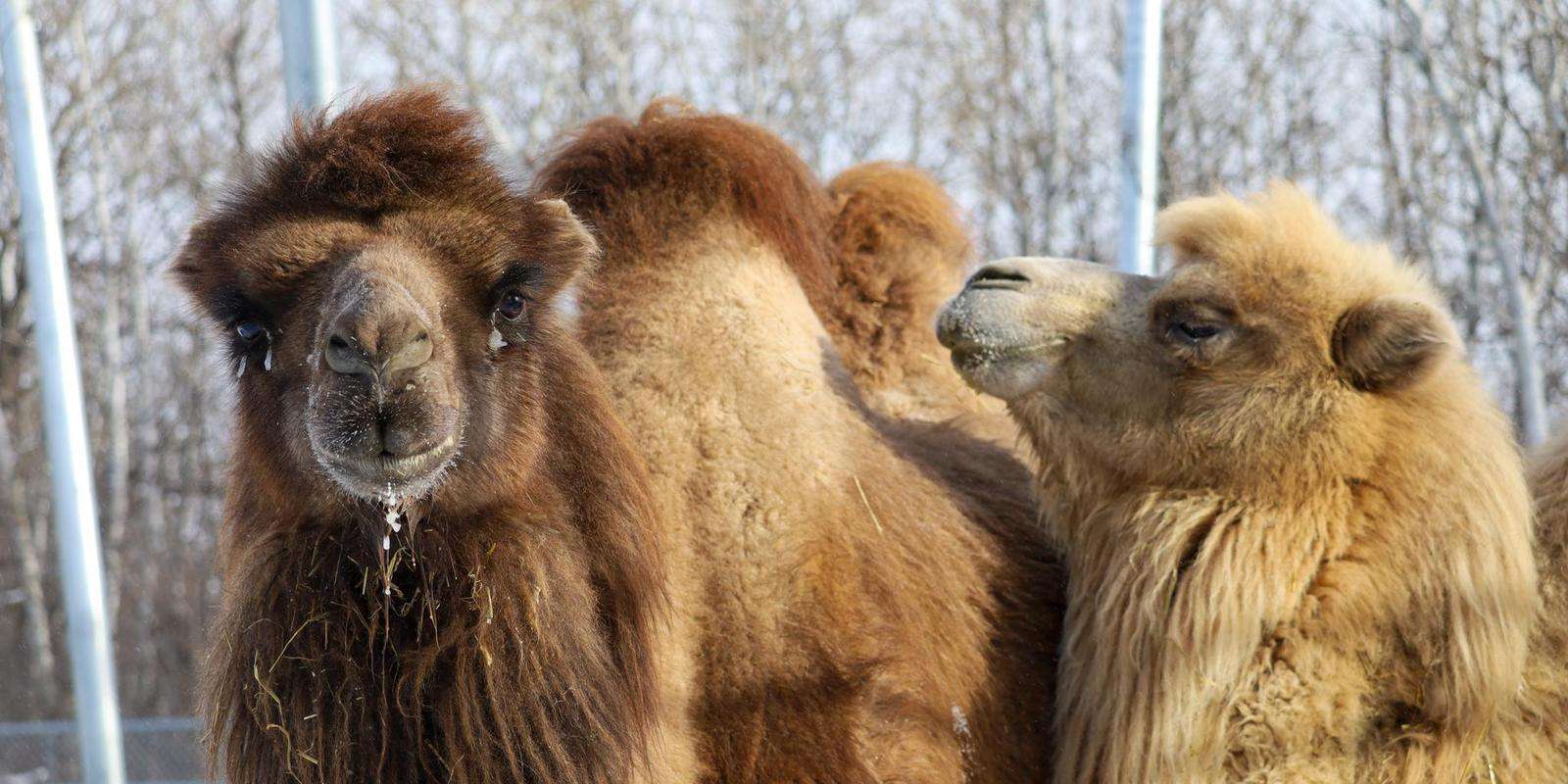
Two of our animal species that thrive in winter are our Bactrian camels: Zaya, Tina, and Sophi, and our herd of domestic yaks: Louise, Moolan, Mooshu, Yaques Cousteau, and Terriyaki.
Discover below how these incredible animals adapt to our cold temperatures and how we help them stay comfortable.
Double Up: How the Bactrian Camels Stay Twice as Warm
- Our camels have two thick layers of fur that help trap heat close to their bodies and stay warm against the snow and wind.
- Having two humps means they have additional insulated fat storage!
- They also have a double set of eyelashes that help keep sand (and snow) away from their eyes.
- A really cool adaptation: they can completely seal up their nostrils to keep that pesky wind and snow away!
- Their nasal passages are specialized to warm inhaled air and exhale colder air to reduce heat loss.
- Their two-toed feet are wide to walk on sand and snow without sinking.
- You will sometimes catch the girls huddling together, but it's not just because they like each other—it's also to conserve heat! (When asked which camel prefers the middle spot of the huddle, we were told it's Zaya.)
- In the wild, if they absolutely needed water, they could eat snow. However, they would only do so in small amounts, as the body must expend significant energy to melt it into water and risk lowering body temperature.
- They also have thick skin that helps prevent heat loss.
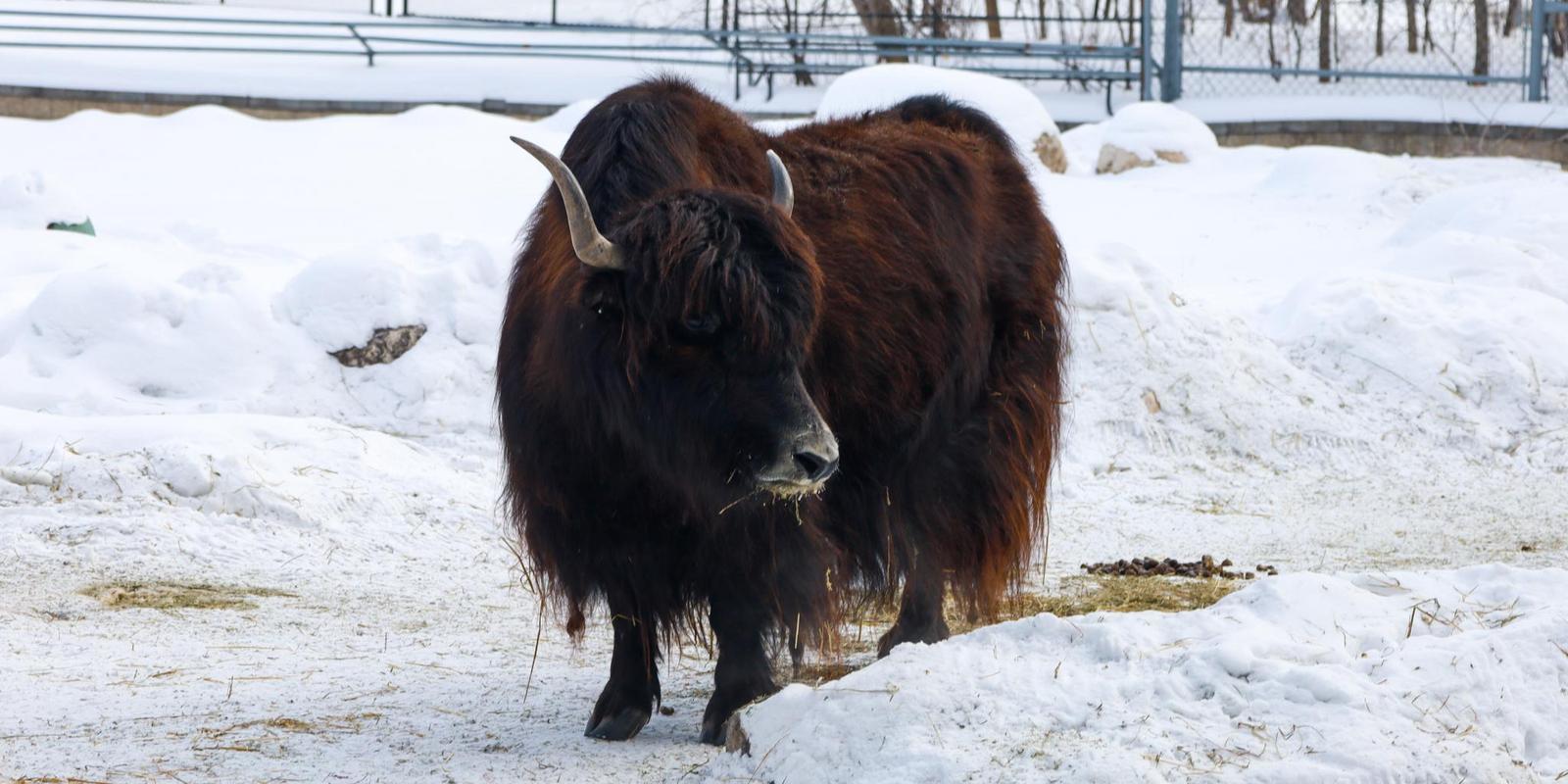
Getting Woolly: How our Domestic Yak Herd Thrives in Winter
- Similar to the Bactrian camels, they have a dense, two-layered insulating coat: a shaggy outer coat and a woolly undercoat.
- Their body structure has evolved to best withstand cold temperatures, with short limbs, small ears, and a short neck. This helps reduce the surface areas exposed to the cold.
- Appendages like their udders and scrotum are smaller and fur-covered to prevent frostbite.
- Before winter comes, they create a nice storage of subcutaneous fat to provide insulation and energy reserves.
- Yaks don't sweat a lot! This helps them prevent heat loss.
- They have limited cutaneous blood vessels, which helps reduce heat loss through the skin.
How We Support Our Winter Animals
Our general care revolves around ensuring they are as comfortable as possible. Here are just a few of the extra things we do to help our animals enjoy winter:
- All our animals have the option to go indoors, and depending on the cold, they may go inside to reduce the risk of frostbite and freezing.
- We will shovel pathways in their habitats for them to move around more comfortably.
- We carefully monitor their heated water bowls to make sure they still have liquid water.
- For the yaks and camels, we'll increase their hay to support fermentation in their chambered stomachs to make more heat. (Camels have three-chambered stomachs and yaks have four!)
- Our team will make deep beds of straw for the animals to lie on, rather than on the cold ground.
- We plan our habitats around having natural windbreaks to keep the space warmer. We will also install artificial windbreaks as needed.
On your next winter visit to the Zoo, check out our hardy winter animals and admire the brilliant adaptations that help make them as winter-tough as we are.