
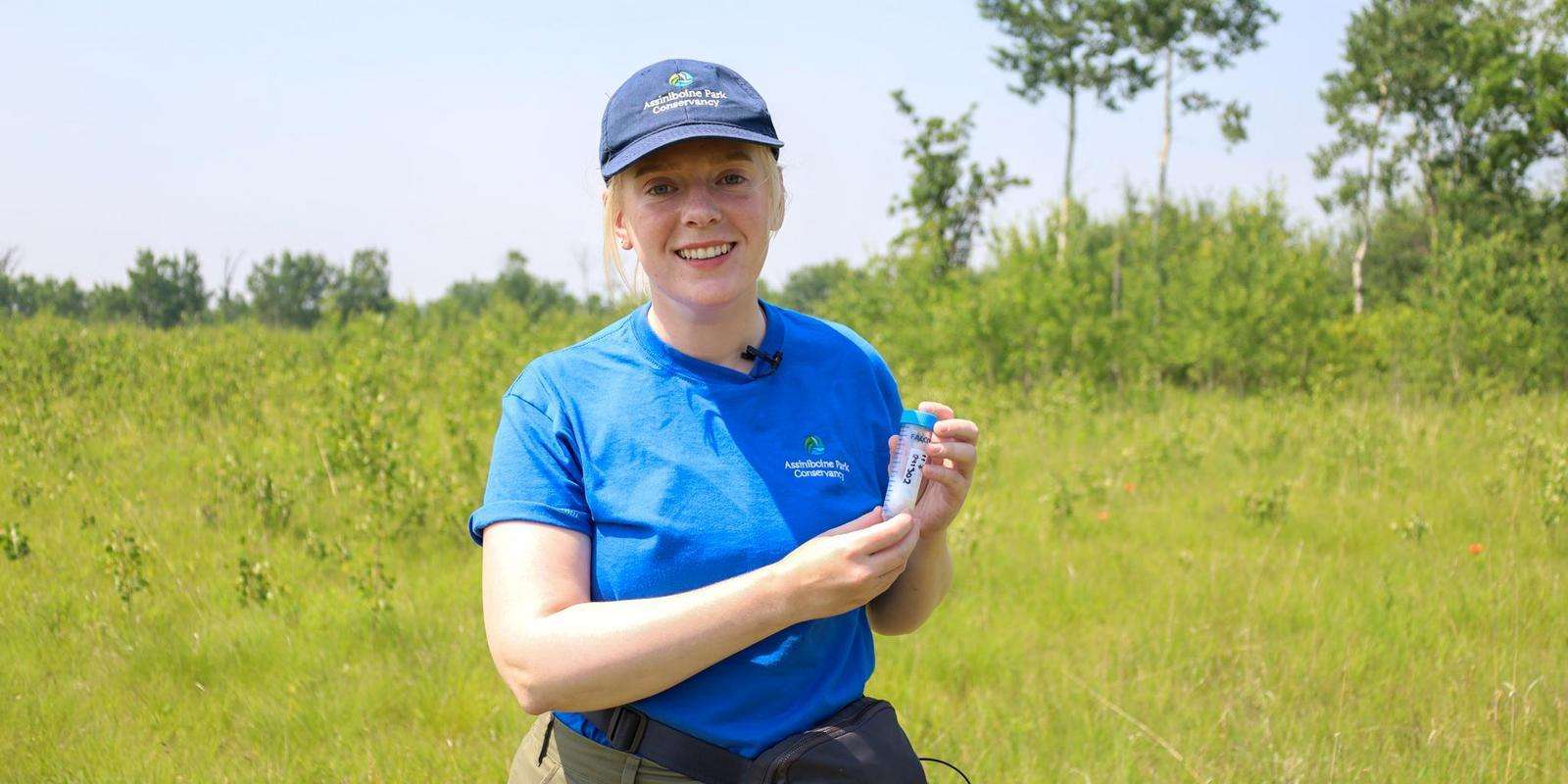
Our Conservation and Research Team works tirelessly year-round to help us better understand the world around us through dedicated studies and research. To shine a light on our fantastic team, we spoke with Kirstyn Eckhardt, Conservation Research Specialist, about her involvement with the Grassland Butterfly Conservation Program and how she's helping protect the Poweshiek Skipperling from extinction.
Q: What is the Grassland Butterfly Conservation Program?
A: It's a program through Assiniboine Park Zoo where we rear, breed, and release endangered Poweshiek Skipperling butterflies in southern Manitoba. Poweshiek are still on the brink of extinction, but thanks to a decade-long collaboration of local and international experts, this species is starting to make a comeback.
Each summer, a small number of wild female Poweshiek Skipperling are brought to the Assiniboine Park Zoo for a short period of time to lay eggs. After laying, these female butterflies are returned to their natural habitat. In addition to these wild females, we also breed Poweshiek Skipperling at the Assiniboine Park Zoo. Once the eggs hatch, we provide optimal growing conditions for the caterpillars, including overwintering in a climate-controlled incubator, until they are ready to be released as adults the following summer. Our team of staff, students, and volunteers conduct extensive field surveys to monitor the health and abundance of wild Poweshiek populations and to measure the impact of our program.
Q: Tell us a bit about you and your involvement with this program.
A: I am a Conservation Research Specialist with the Conservation and Research team with a Master of Science degree in Entomology. I started working on the Grassland Butterfly project in 2019 as a Conservation Assistant, before completing my M.Sc. research on Poweshiek Skipperling growth and development in 2024. My role on the project now involves training staff, conducting field surveys and butterfly releases, writing project reports, and contributing to conservation planning.
.jpg)
Q: What inspired your passion for Poweshiek Skipperling butterflies?
A: I grew up in Manitoba, but until I started working at Assiniboine Park Zoo, I had never heard of the tiny Poweshiek Skipperling. Working on this project has really helped me appreciate all the unique wildlife and ecosystems in Manitoba, including the incredible tallgrass prairie – one of the rarest habitats in the world. I am so grateful to be able to contribute to the recovery of Poweshiek alongside other passionate people. My colleagues in the U.S. and Canada are some of the coolest, most interesting people I know! It has been so rewarding to see the impact we are collectively having on this species’ recovery.
Q: Why does this project matter for the future of this species and our environment?
A: Even though our team observed record-high numbers of wild Poweshiek Skipperling during our surveys in 2026, the Poweshiek is still highly imperilled. Poweshiek were once distributed from southern Manitoba to Michigan but have become extirpated (locally extinct) from all but a few small pockets of tallgrass prairie habitat. In the future, we plan to continue reintroducing Poweshiek butterflies back to areas of suitable habitat within their former range, an important step toward ensuring populations are genetically healthy and robust to environmental changes.
Q: Do you have a favourite memory from your time out in the field?
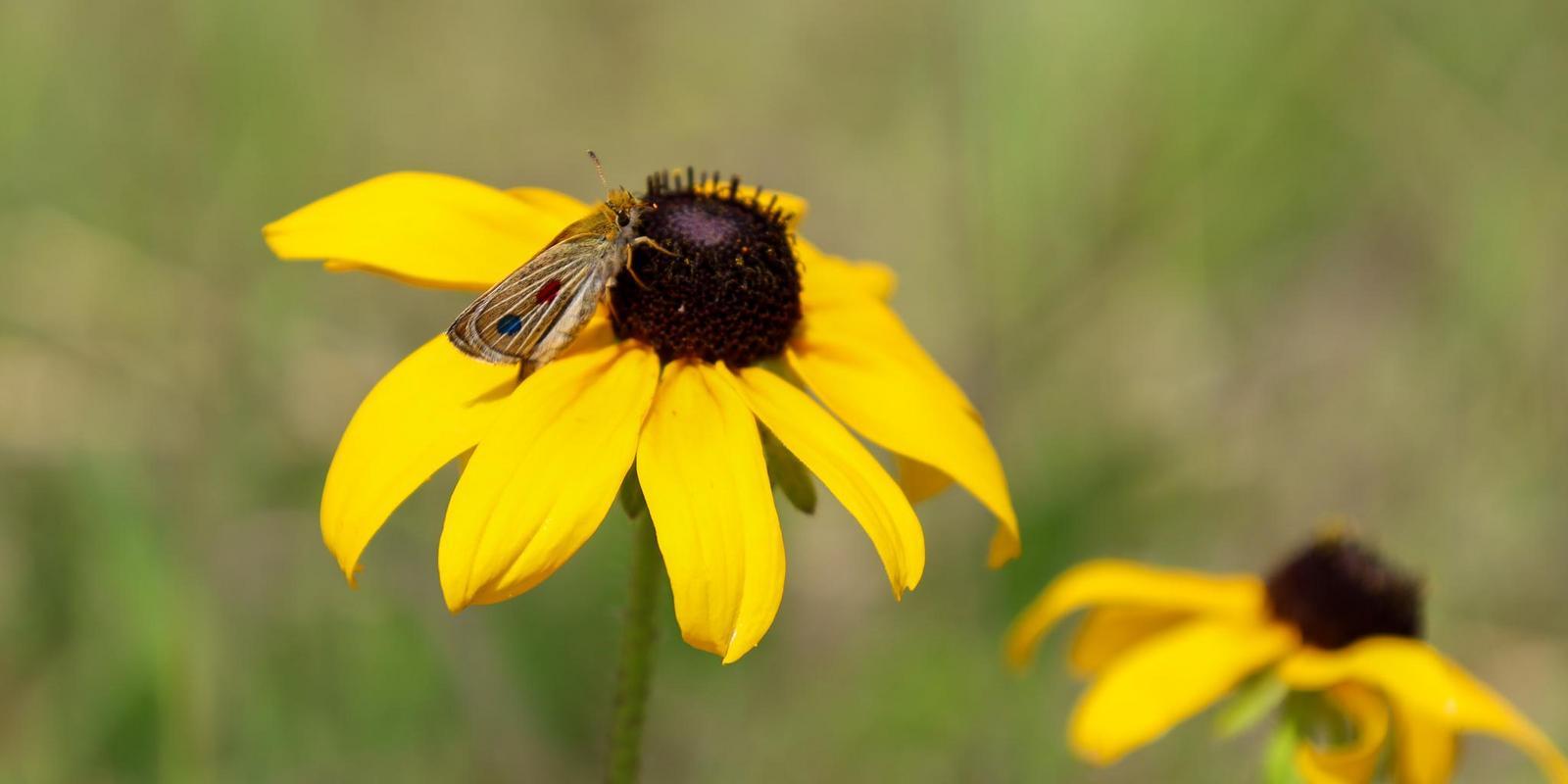
A: One of my favourite parts about fieldwork is exploring new areas of habitat to search for Poweshiek Skipperlings (these are called “meandering surveys”). This summer, I got the chance to meander in areas adjacent to our active field sites and found a beautiful Poweshiek habitat full of Black-eyed Susans, their favourite nectar plant. In an area the size of an office cubicle I watched three or four Poweshiek butterflies sitting side-by-side on flowerheads – a sight that I would never have seen back in 2019 when the Poweshiek population was so small that you could walk a kilometre and only see one or two butterflies. This moment stands out for me as a reminder about how far we (and the species) have come toward recovery!
Q: Lastly, what would you want to say to future researchers/a younger version of yourself about the work you’re doing?
A: Try not to feel intimidated! You belong in science, your perspective matters, and you have important knowledge to contribute.