
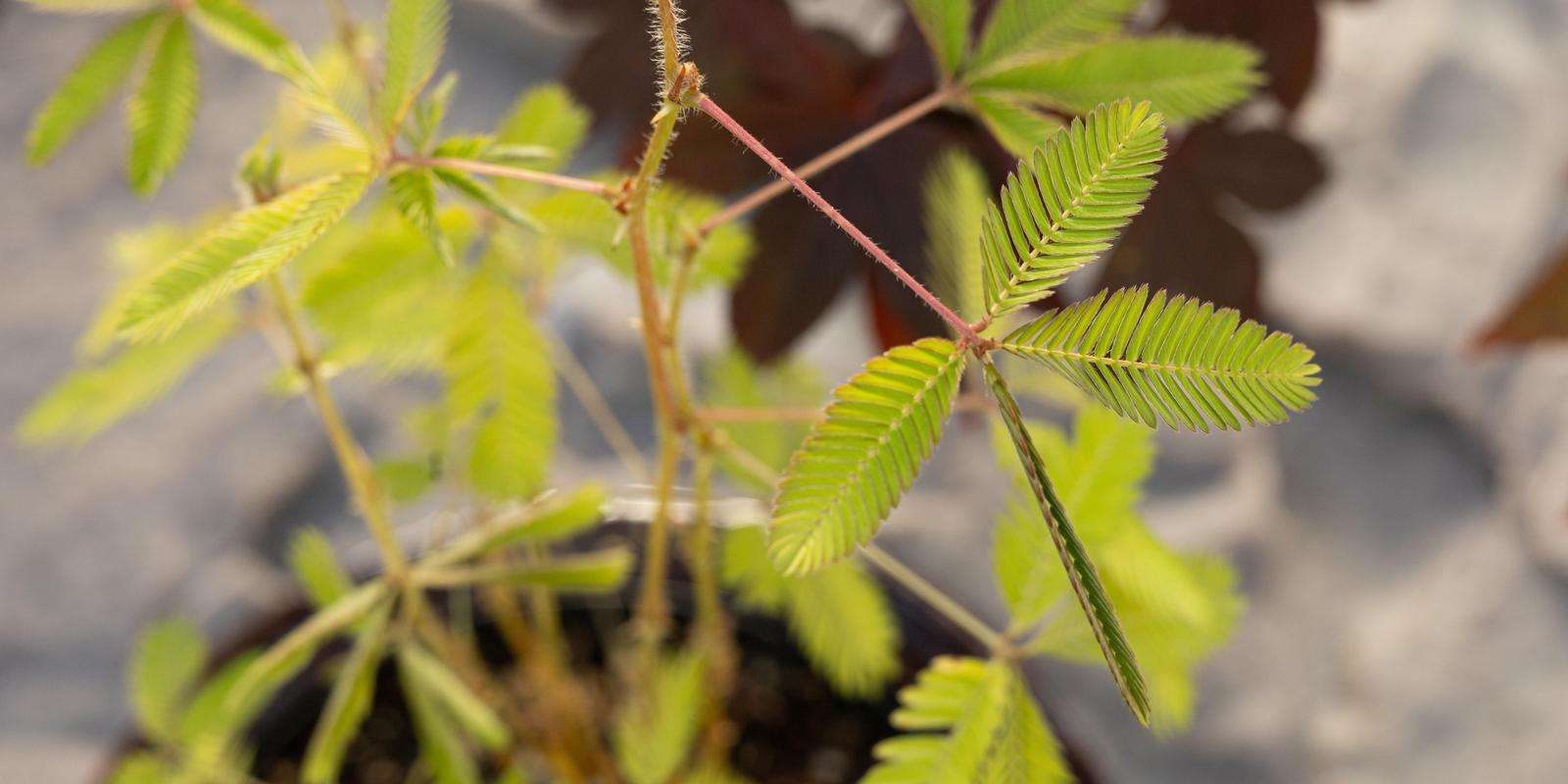
While most of the plants in Fabled Woods, The Leaf's fall display, are moody and mysterious, some are a little more... touchy. Learn more about the sensitive plant (Mimosa pudica), how it got its name, and how to care for one in your home.
Basics: Mimosa pudica goes by many names, including sleepy grass, humble plant, and shy plant. It is a flowering plant in the pea (legume) family, with soft, delicate purple-pink flowers that resemble pom-poms. The plant typically reaches a height of about 30 cm.
Why are they so sensitive?: Their name comes from their remarkable ability to respond to touch by folding their leaves inward. This rapid movement is known as thigmonasty. Although the exact evolutionary advantage remains uncertain, scientists believe it may help deter herbivores or reduce environmental stress. Sensitive plants can be stimulated by touch, shaking, or even strong air movement. However, it's best not to trigger this response too frequently, as repeated leaf closure requires energy and temporarily reduces photosynthesis.
Region: Sensitive plants are native to South and Central America and the Caribbean. Today, they can also be found throughout many tropical and subtropical regions, including parts of Asia such as Japan, Taiwan, India, and Vietnam.
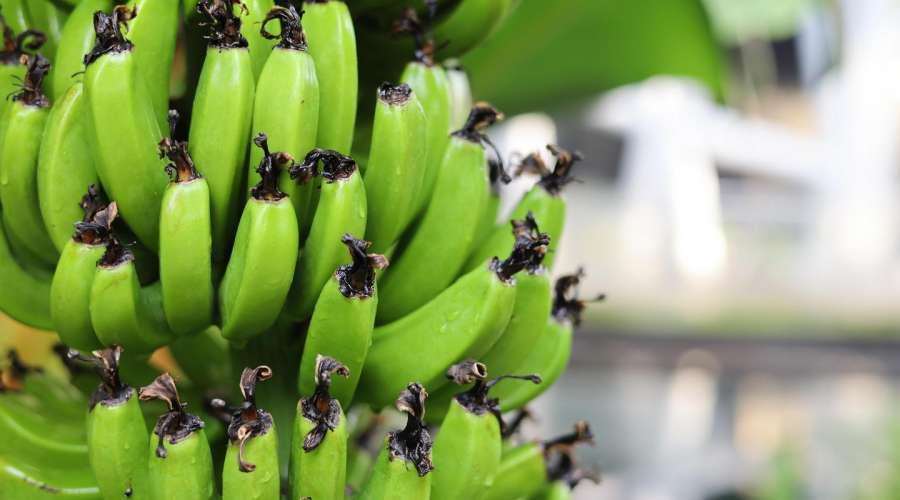
Invasion and Impact: The sensitive plant is considered invasive in parts of South and Southeast Asia, Tanzania, and Australia. It can become a troublesome weed in crops, including coconut, banana, coffee, and sugarcane plantations. The plant contains mimosine, a compound that can be toxic to livestock if consumed in large quantities. It may also alter soil conditions by increasing nitrogen and potassium levels.
Growing Your Own: Sensitive plants are commonly grown indoors as perennials. They prefer full to partial sun and well-draining soil. While they bloom most heavily in summer, they can continue growing year-round indoors. If allowed to set seed, they may spread readily, so be sure to monitor new seedlings.
See the sensitive plant at the Leaf at our new display, Fabled Woods, on now until November 29.