
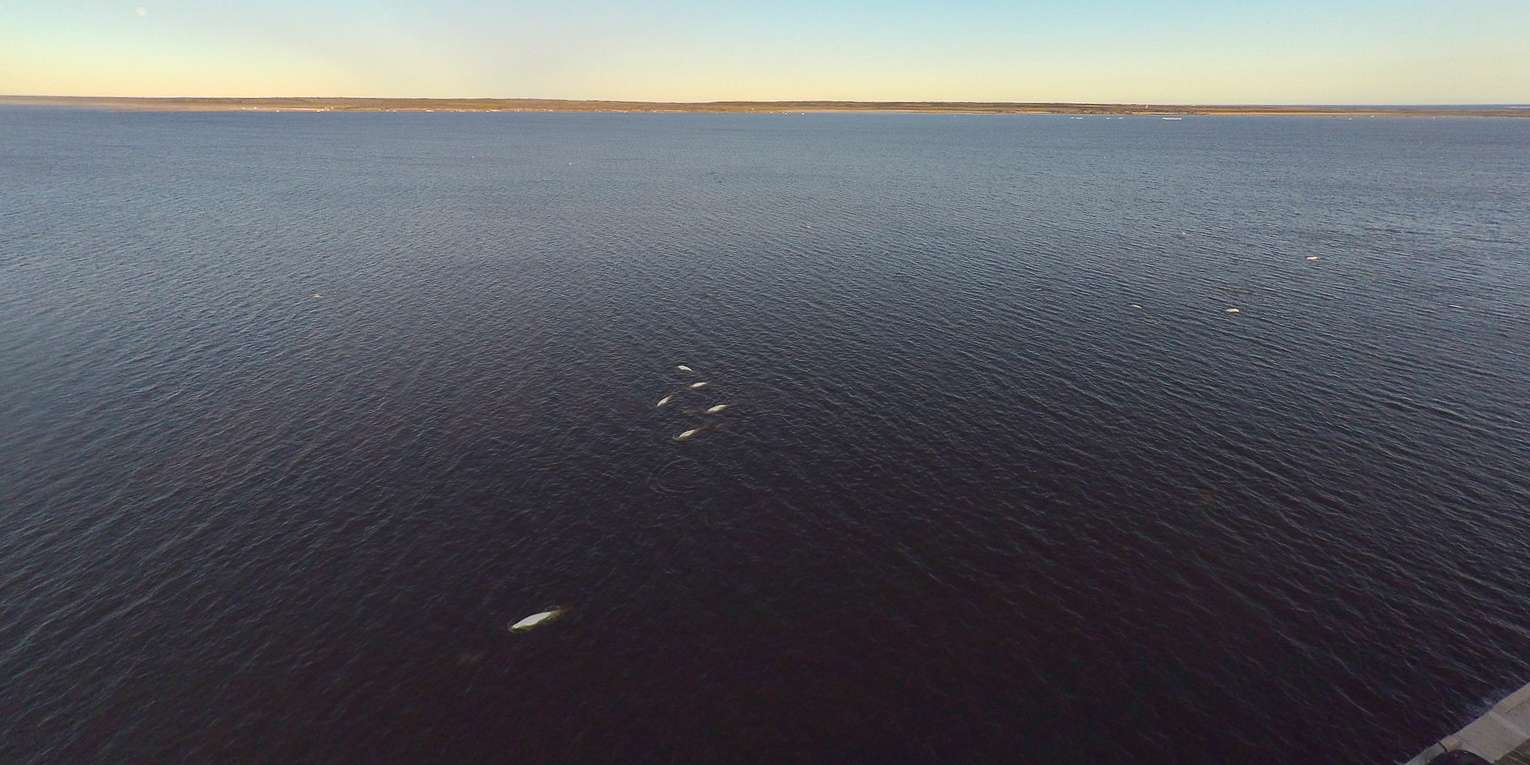
Against a blue expanse, with the grey concrete pier of the Port of Churchill visible in the foreground, specks of white emerge from the waves.
These are beluga whales, the vanguard of a population of over 55,000 that represents the world’s largest migration of its kind—and these are the first pictures of them captured this year by a project that aims to better understand interactions between vessels and the belugas that come to Churchill each year to feed, socialize, and raise their young.
Ships have been coming here for longer than Canada has been a country: while traffic has seen its ups and downs, Churchill has been a stopping place since before the heyday of the Hudson’s Bay Company. The belugas have been coming here even longer, playing an important role in the life of the region’s Indigenous peoples, including Inuit, Cree, Dene, and Métis. Today, the town of Churchill is home to both a vibrant port and a thriving tourism industry, thanks in part to the belugas that travel here each summer.
However, sharing these waters comes with risks that need to be managed. If you drop a hydrophone down while the belugas are in Churchill, you can hear a chorus of chirps and whistles beneath the waves—these whales are sometimes called the “canaries of the sea” because of their complex vocalizations, which they use to navigate, feed and communicate. Their reliance on sound allows them to move through the dark and cloudy waters with ease, but it also raises concerns about the impacts from vessels, which produce noise of their own. Studies elsewhere have found that belugas will dive, flee or swim faster to avoid these sounds.
As Churchill grows and as interest increases in expanding shipping through the port, it is important to understand how that might affect the whales—especially given their migration to and summer use of the Churchill River estuary overlap with the shipping season.
That is the focus of the project being led by Assiniboine Park Conservancy with support from Oceans North. Using time-lapse cameras overlooking the port, the goal is to see how belugas are responding to different kinds of vessels, with snapshots capturing the presence and distribution of whales at regular intervals.
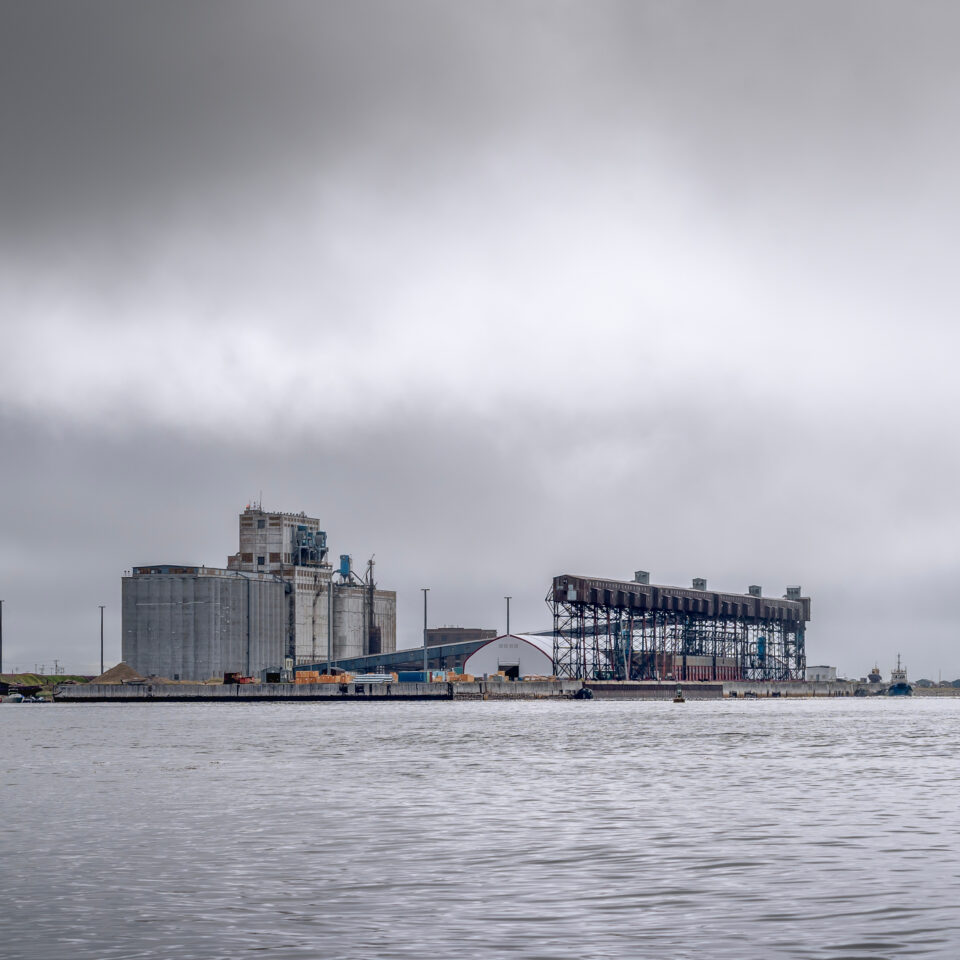
The Port of Churchill, as seen from the Churchill River.
A pilot project conducted last year tested the view from a camera placed in two different locations: one at the Churchill Marine Observatory, and one attached to a dry-docked tugboat at the end of the port. Ironically, the marine observatory was not the best place to observe the marine mammals due to the location being set too far back from the estuary. The tugboat fared better, capturing 11,705 photos over 72 days that detected 1,887 whales. Analyzing these images, researchers are beginning to understand how vessels such as zodiacs, kayaks, cruise ships, and cargo vessels may change the distribution of beluga near the port.
This year, the researchers will get a better view thanks to Arctic Gateway Group, the Indigenous– and community-owned company that owns and operates the Port of Churchill, which has allowed two cameras to be installed up in the port gallery. This will provide clearer lines of sight on both the ships and the whales as they move through the area, giving the team a better understanding of whether—and how—these interactions are affecting whale numbers.
.jpg)
Cameras were installed at the port as part of a research project between Oceans North and the Assiniboine Park Conservancy
.jpg)
Dr. Courtney Shuert and Dr. Kasey Ryan at the Port of Churchill
The hope is that this research can also be used to help inform future decision-making and monitoring. In February, the Government of Manitoba announced its interest in exploring a National Marine Conservation Area designation for the broader Western Hudson Bay region, which would help protect the whales and those that rely on them while supporting sustainable economic development. Alongside engagement with communities and stakeholders, and with the guidance of local and Northern leadership, projects like this one can help contribute to a future where people and nature continue to flourish alongside one another.
In the meantime, the whales continue to arrive as they always have, as the cameras capture a world that is both changing and reassuringly familiar.