
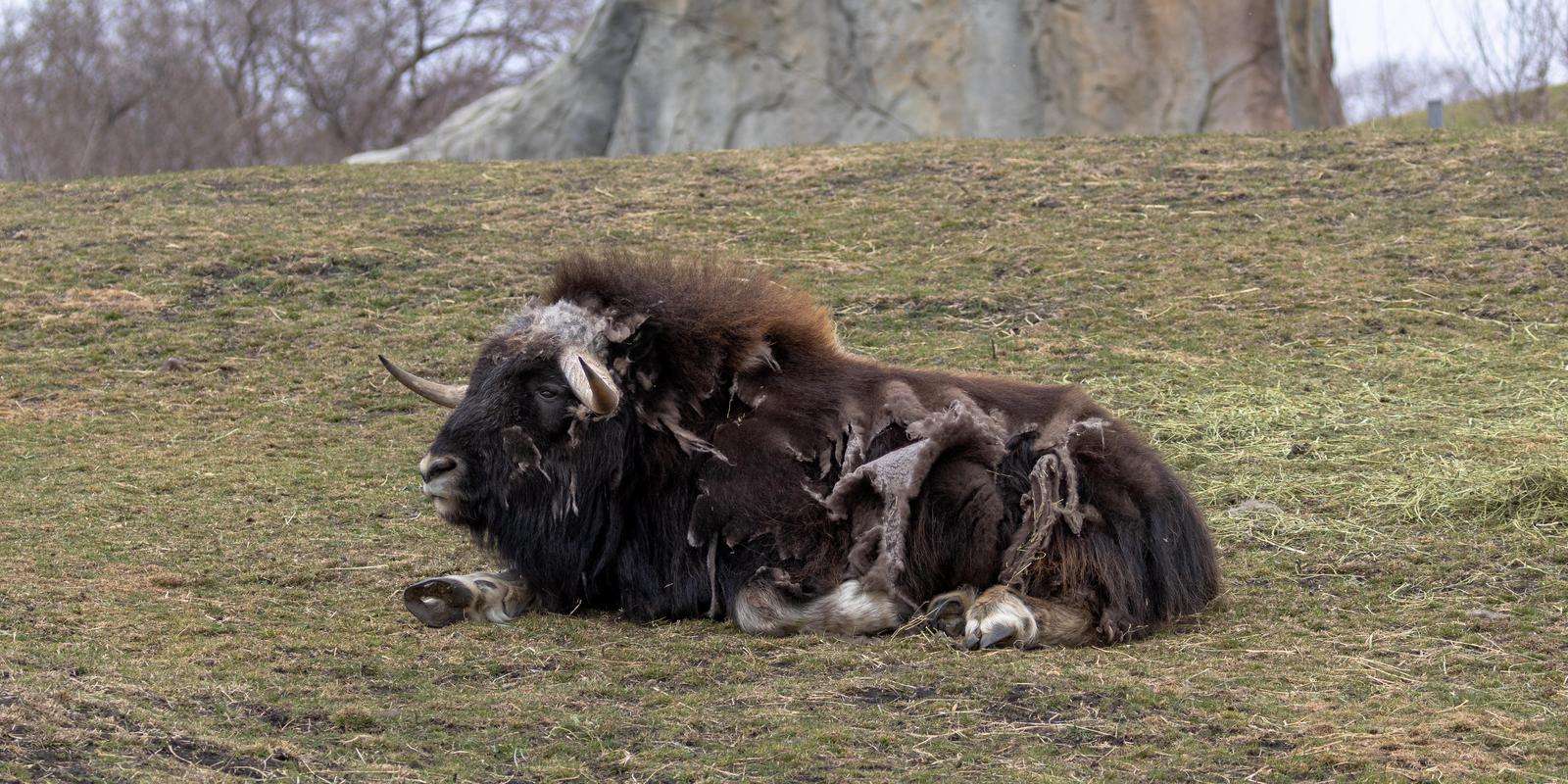
They're big, hooved, and fascinating – it's the mighty muskox (Ovibos moschatus), a true icon of the vast Arctic landscape. Learn more about these remarkable animals, how they keep themselves warm, and the importance of their fur.
Basics: Muskox are in the Bovidae family, which includes other hooved animals like bison, sheep, and goats. Both males and females have long, curved horns. Males stand about 5 feet tall at the shoulder and weigh 600–800 pounds, while females are smaller, averaging about 4 feet and 400–500 pounds. They can reach speeds of up to 60 km/h and their life expectancy ranges from 12 to 20 years.
Habitat: Muskoxen live in Greenland and the Canadian Arctic of the Northwest Territories and Nunavut. They previously had a wider range across Eurasia as well. After reintroductions in the 20th century, populations were established in Alaska, Siberia, and Scandinavia. During the summer, muskoxen live in wet areas such as river valleys, moving to higher elevations in the winter to avoid deep snow.
Diet: Muskoxen eat grasses, Arctic willows, woody plants, lichens, and mosses. Willows are their most eaten plants in the winter.
Conservation Status: According to the IUCN Red List, muskoxen are of Least Concern, thanks in part to hunting regulations. However, the population has decreased by 8% between 1998 and 2019 due to climate change affecting their ability to forage.
Keeping Warm in Winter: Muskoxen are heterothermic, meaning they can shut down thermoregulation in certain parts of the body to reduce heat loss. This helps them conserve core body heat in extreme Arctic conditions.
Valuable Fur: Muskoxen have a two-layered coat, and their soft underwool is called qiviut. Every spring, they shed this layer. An adult muskox can produce 1.8 to 3.2 kg (4 to 7 lb) of qiviut per year. Qiviut is prized for being extraordinarily warm, soft, hypoallergenic, and resistant to shrinking or felting. Due to the labour-intensive harvesting and processing, finished qiviut garments like scarves and sweaters can be quite expensive.
APZ Location: Journey to Churchill
On your next visit to the Zoo, come see our pair of muskoxen – Rumble and Émeraude!